







- Work Hard
- 4th Sep 2026
- 0
- 0 minute
Meet the chef who’s behind the North East’s first Indian supper club
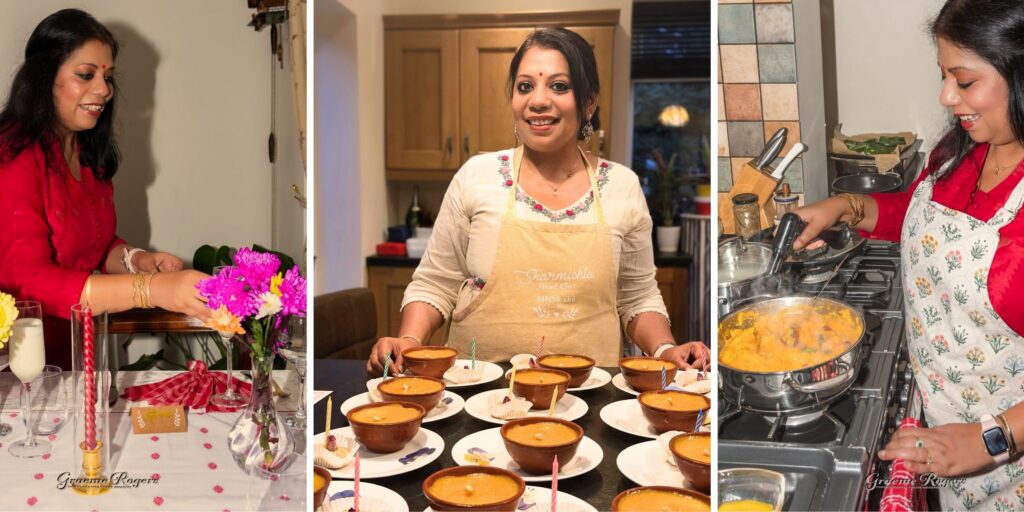
Image credit: Graeme Rogers and SJ Shoots
Forget everything you think you know about “Indian food.”
Sharmishta Chatterjee-Banerjee is on a mission to prove there’s no such thing, one sold-out sitting at a time. Her Newcastle supper club, SHOR.shé, is widely believed to be one of the North East’s first dedicated to Indian regional cuisine, and it tells the story of Kolkata, the city she grew up in, through food, history and 12 seats around one table.
FROM A LOCKDOWN COOK-ALONG TO A SOLD-OUT SUPPER CLUB
SHOR.shé began, in many ways, during the pandemic. Sharmishta, who was working at Newcastle University at the time, ran an online cook-along for colleagues, expecting a quiet lesson in a few Indian recipes. What she got instead was a room full of people hungry for the stories behind the food.
“They were genuinely surprised to discover the incredible diversity of Indian regional cuisines, and that what many people in Britain think of as ‘Indian food’ bears little resemblance to what families cook at home.”
She’s lived in the North East for many years now, and calls it home. Professionally, she’s spent more than 2 decades in international higher education, building global partnerships for universities, and was recognised on the 2024 Northern Power Women Awards list. SHOR.shé grew out of that same belief: that globally significant conversations don’t have to happen in London. They can happen around a table in Newcastle.
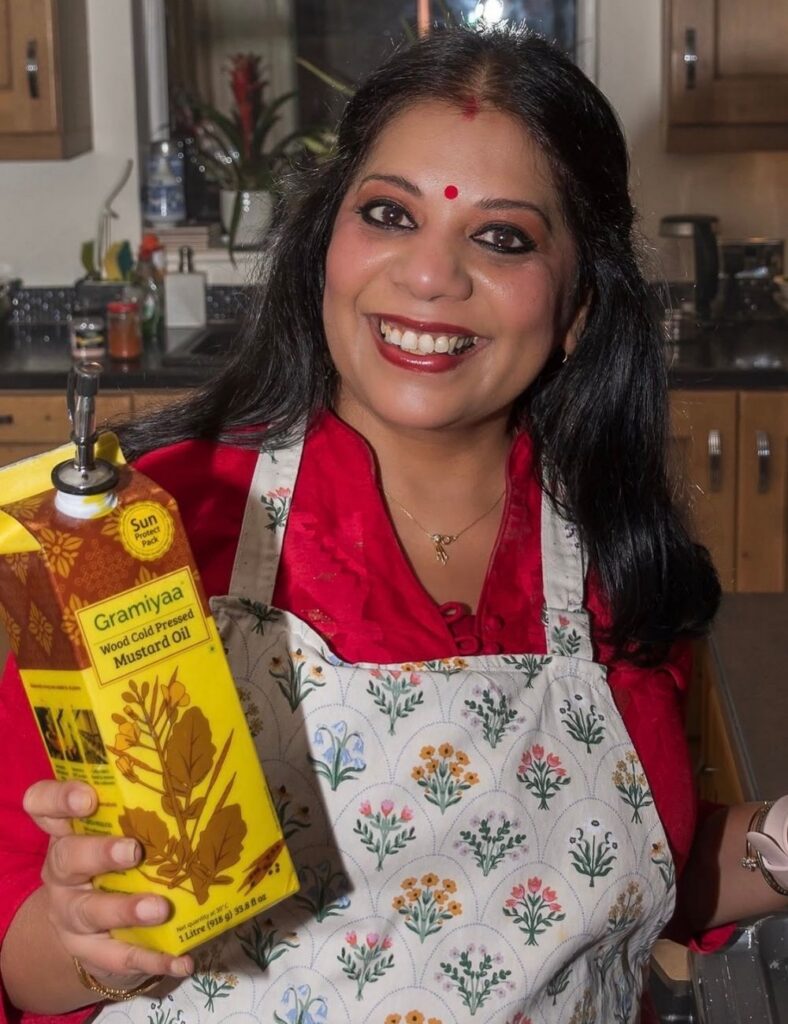
KOLKATA, TOLD THROUGH 12 SEATS
Sharmishta doesn’t see herself as someone who “works in food.” She describes herself instead as an international strategist, researcher and storyteller who happens to use food as her medium, and every SHOR.shé menu is built the same way as her day job: by understanding people, history and culture first.
“It’s a storytelling dining experience where food becomes a way of exploring the history of one of the world’s great trading cities, Kolkata, and the influence trade has had on the multi-cultural cuisine it presents today.”
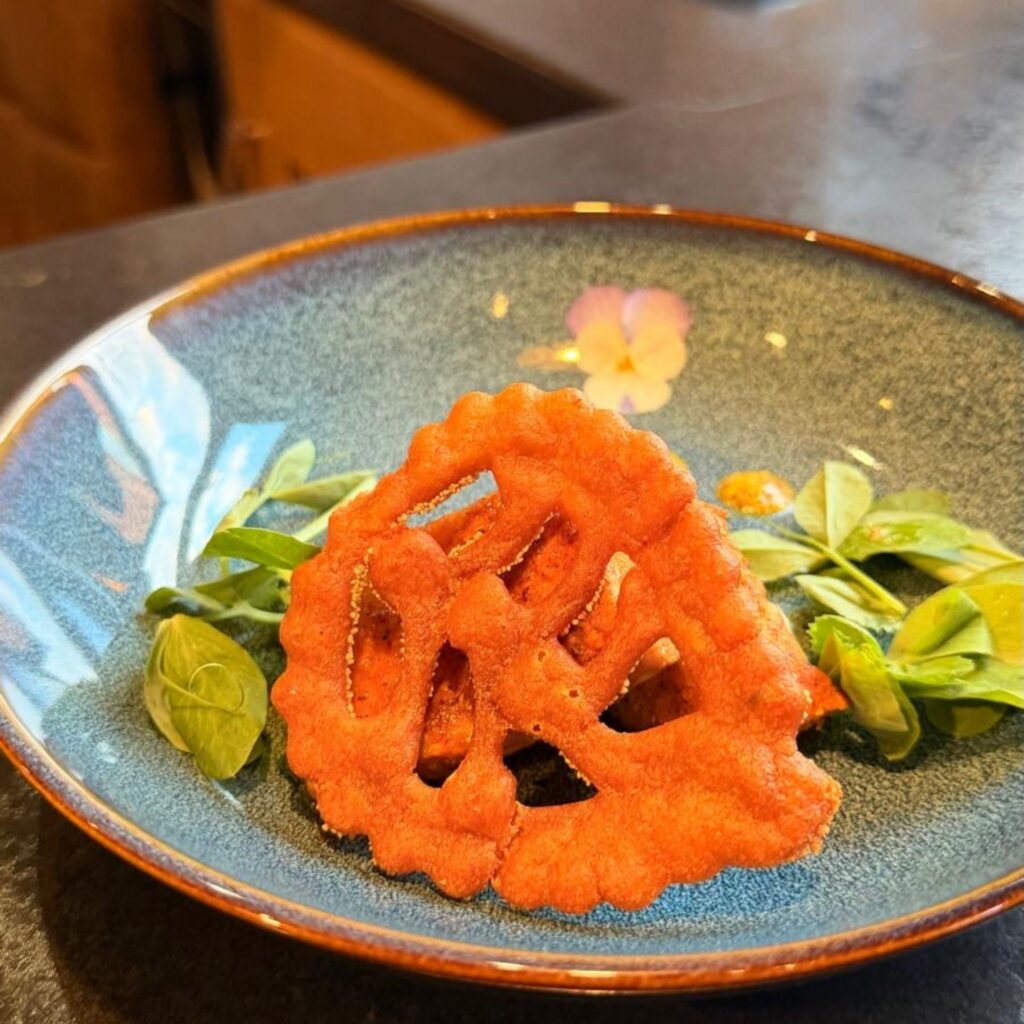
Each menu brings a different chapter of that history to the table, from Bow Barracks’ Anglo-Indian heritage to The Empire’s Gambit’s Mughal and Awadhi influences, and the Joy Narayan Dhām menu, which traced Bengal’s love of posto (poppy seeds) back through the opium trade, colonial economics and the Bengal famine.
“We don’t serve nostalgia, we serve what is evidenced by history.”
Even the running order is a small act of storytelling. At SHOR.shé, poppadoms and chutney arrive as the penultimate course, not the starter, exactly as they’re traditionally enjoyed in many Bengali homes.
RESEARCH FIRST, RECIPE SECOND
Ask Sharmishta how a trade route becomes a dish and she’ll tell you it never starts with a recipe. It starts with a question: why do Bengalis love posto? What did the Mughal courts leave behind in Kolkata? Why did Chinese migration transform the city’s street food?
“We don’t think about ‘what shall we cook?’ We often debate within the family about ‘what story deserves to be told?’ The menu is simply the way we answer that question.”
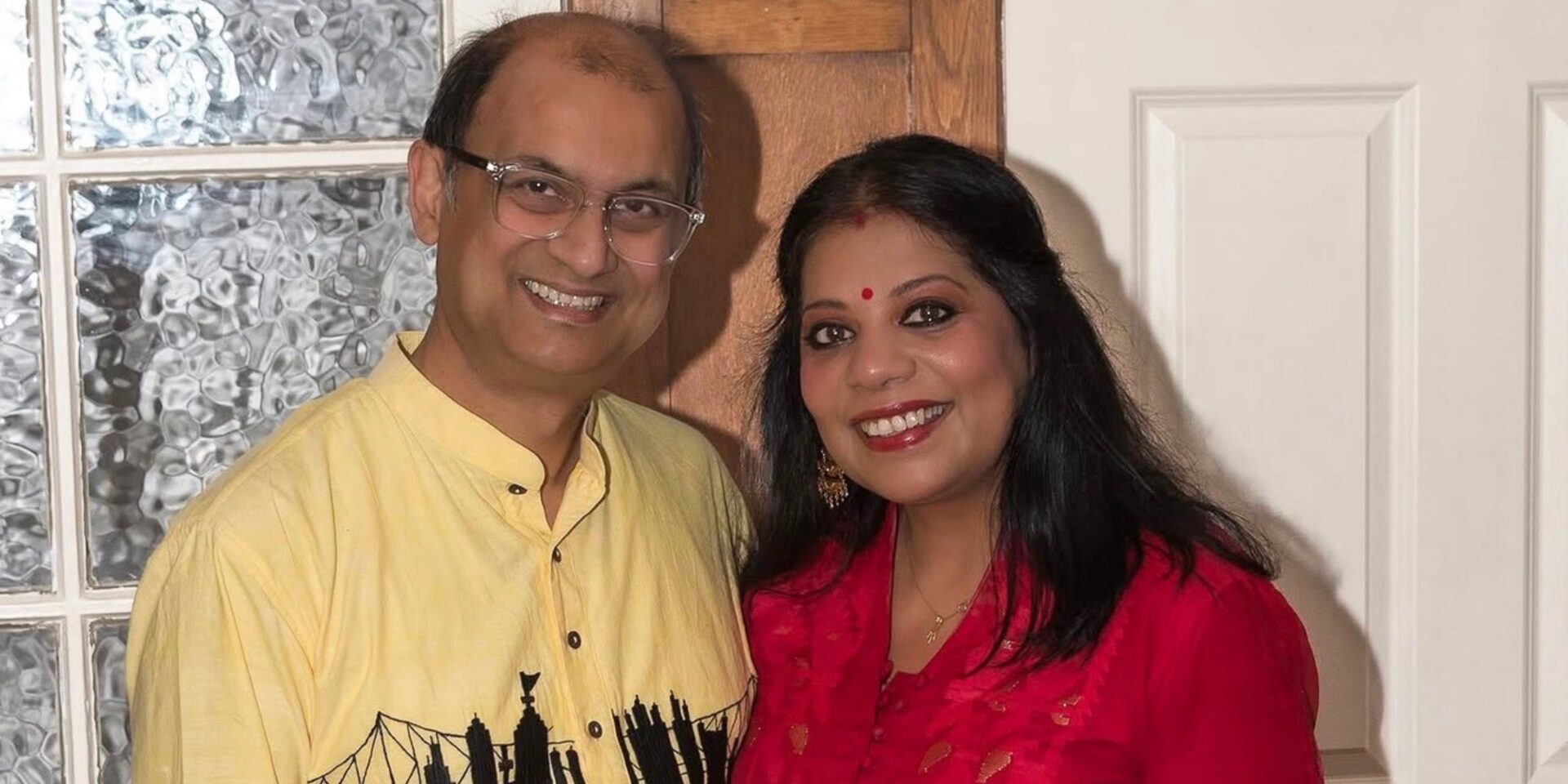
Weeks of academic texts, archives, old cookbooks and oral histories go into every menu, much of it worked through with her husband, Professor Anurag Banerjee of Durham University, an economist by profession and a history enthusiast by nature. Their kitchen-table debates about trade, migration and politics become the backbone of every supper club.
BEYOND THE CURRY LABEL
If there’s one assumption Sharmishta is determined to unpick, it’s the idea that “Indian food” is one thing, or that it can all be filed under “curry.”
“The word curry is really a colonial catch-all rather than something Indians themselves use to describe their food… curry isn’t a cuisine, it is a label that oversimplifies extraordinary diversity.”
Kolkata, she says, is one of the best examples of that complexity: Mughal influences, Chinese migration, Armenian merchants, Jewish bakeries and Anglo-Indian households, all within one city, all still visible on the plate today.
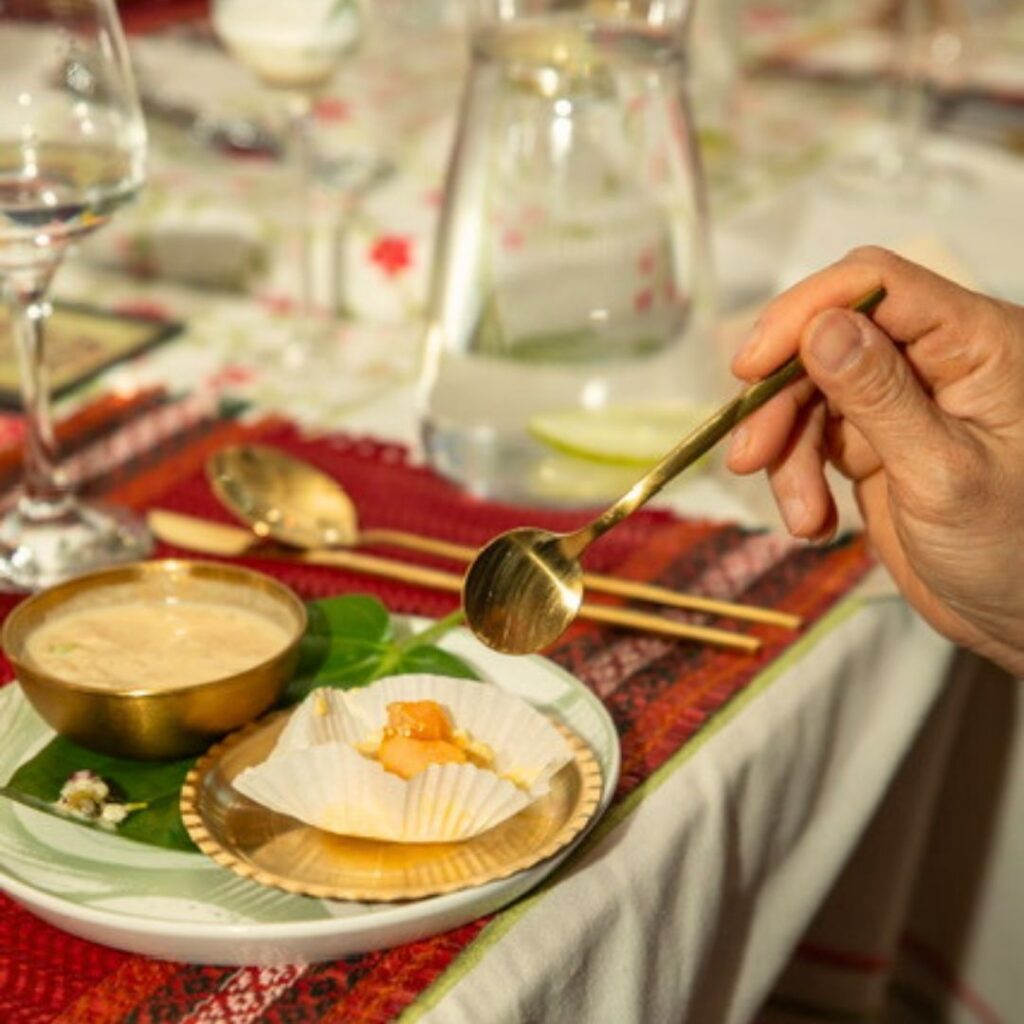
12 SEATS, ONE CONVERSATION
Every SHOR.shé sitting has sold out, some within hours. Sharmishta thinks it’s less about the food than what sits alongside it.
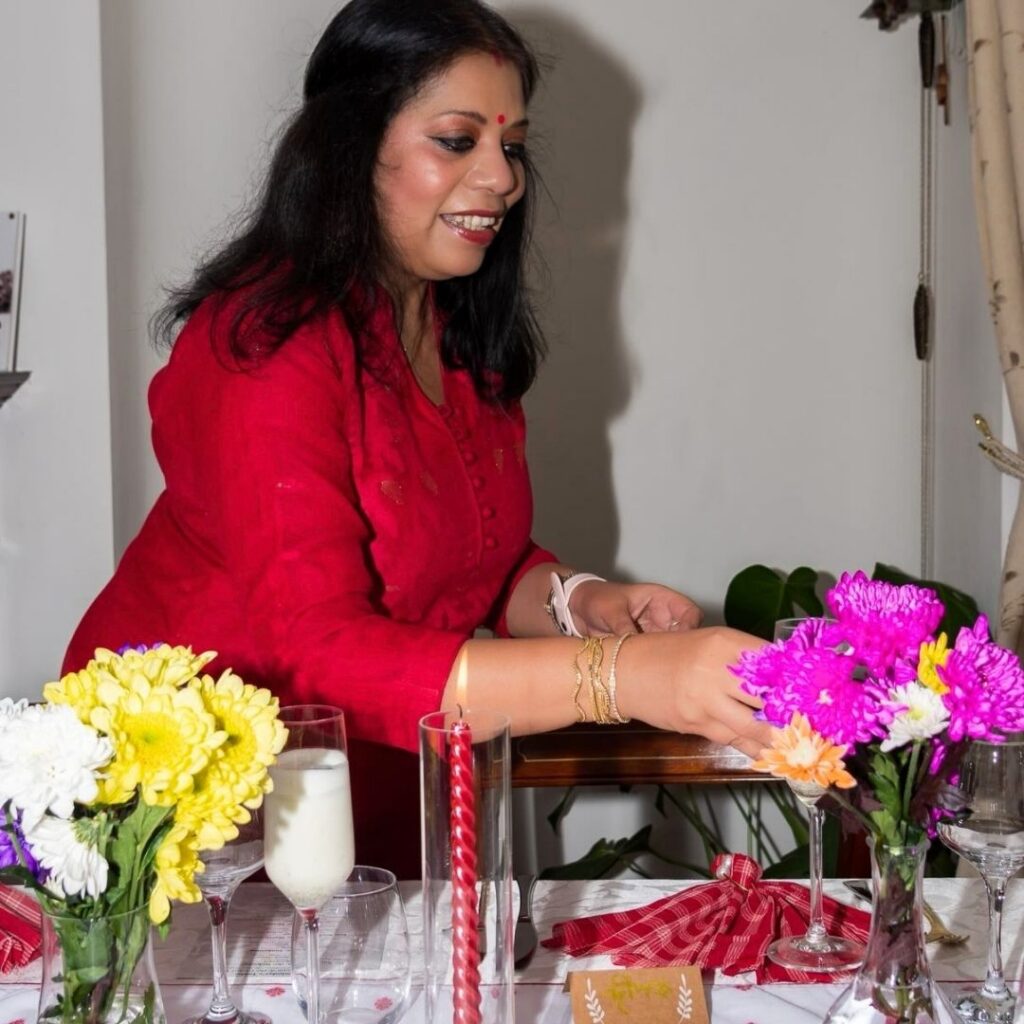
“People often tell me it feels like attending a dinner party, a history seminar and a cultural exchange all at once… we deliberately keep SHOR.shé to just twelve guests because everyone has a voice.”
It’s a deliberate, small-scale intimacy in an era of ever-bigger dining experiences, and it’s exactly why guests remember the conversation as much as anything that came out of the kitchen.
WHAT’S NEXT FOR SHOR.SHÉ
SHOR.shé has already started celebrating the women who shaped Kolkata’s culinary history, including Tagore & Company, built around the recipes of pioneering Bengali cookbook author Pragyasundari Devi. Next up: curated Kolkata food and history tours in 2027, alongside hands-on cooking classes in the city itself.
“Ultimately, SHOR.shé isn’t really about food. What we’re really doing is connecting people to history, to place, to one another and sometimes even to their own memories.”
HLN TOP TIP: You can try SHOR.shé for yourself at upcoming supper club dates on the 19th November and 10th December.



Rachael Ellis
Head of Content
After gaining a first in her BA Media and Journalism degree at Northumbria University, Rachael worked at Newcastle’s leading regional newspaper with her stories being picked up in national and global newspapers. She spent two very successful years giving a voice to those communities across the North East who otherwise…
Subscribe
Subscribe now to receive our twice-weekly emails and exclusive offers for High Life North readers.