







- Play Hard
- 14th Aug 2026
- 0
- 0 minute
What was Ouseburn like before it became Newcastle’s go-to spot? We delve in
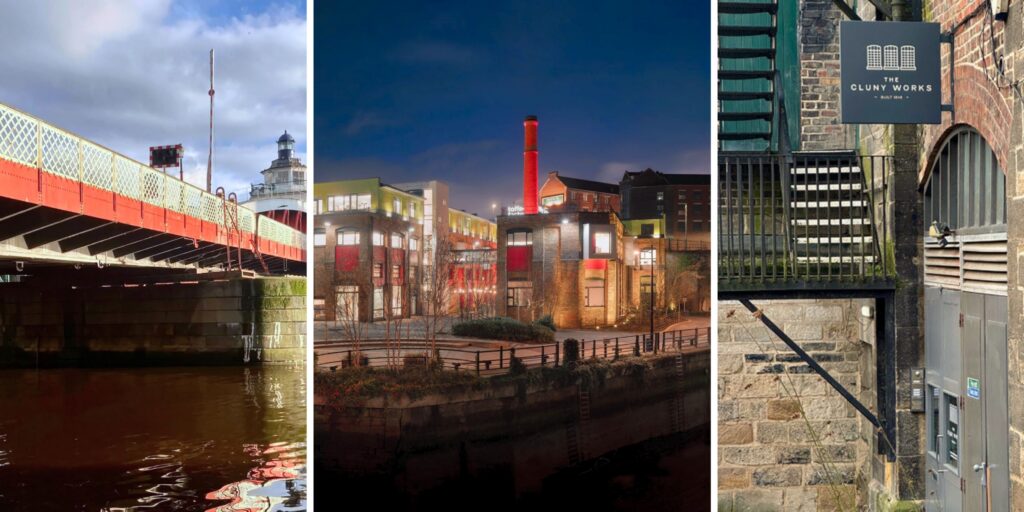
Ouseburn’s industrial past is impossible to miss once you start looking for it, even as the valley thrives as one of Newcastle’s favourite spots for a weekend out.
Grab a coffee at Kiln, duck into a pop-up exhibition, or catch live music at The Cluny, and there’s a good chance you’re standing somewhere that once helped power the city’s economy.
Long before the cafes, galleries and studios arrived, Ouseburn was one of Newcastle’s busiest industrial areas, packed with factories, warehouses and workshops.
What’s remarkable is that the valley hasn’t reinvented itself by leaving that history behind. Many of the buildings that once supported industry are still here, simply doing a different job. It’s part of what makes Ouseburn feel so distinct from other regenerated corners of the city.
A VALLEY BUILT ON THE RIVER
The Ouseburn, a tributary of the River Tyne, made the valley an obvious spot for industry. From the 17th century onwards, businesses including glassworks, potteries, flour mills, tanneries, lead works and engineering firms set up here, drawn by the river and Newcastle’s expanding industrial economy.
THE TUNNEL HIDING BENEATH THE STREETS
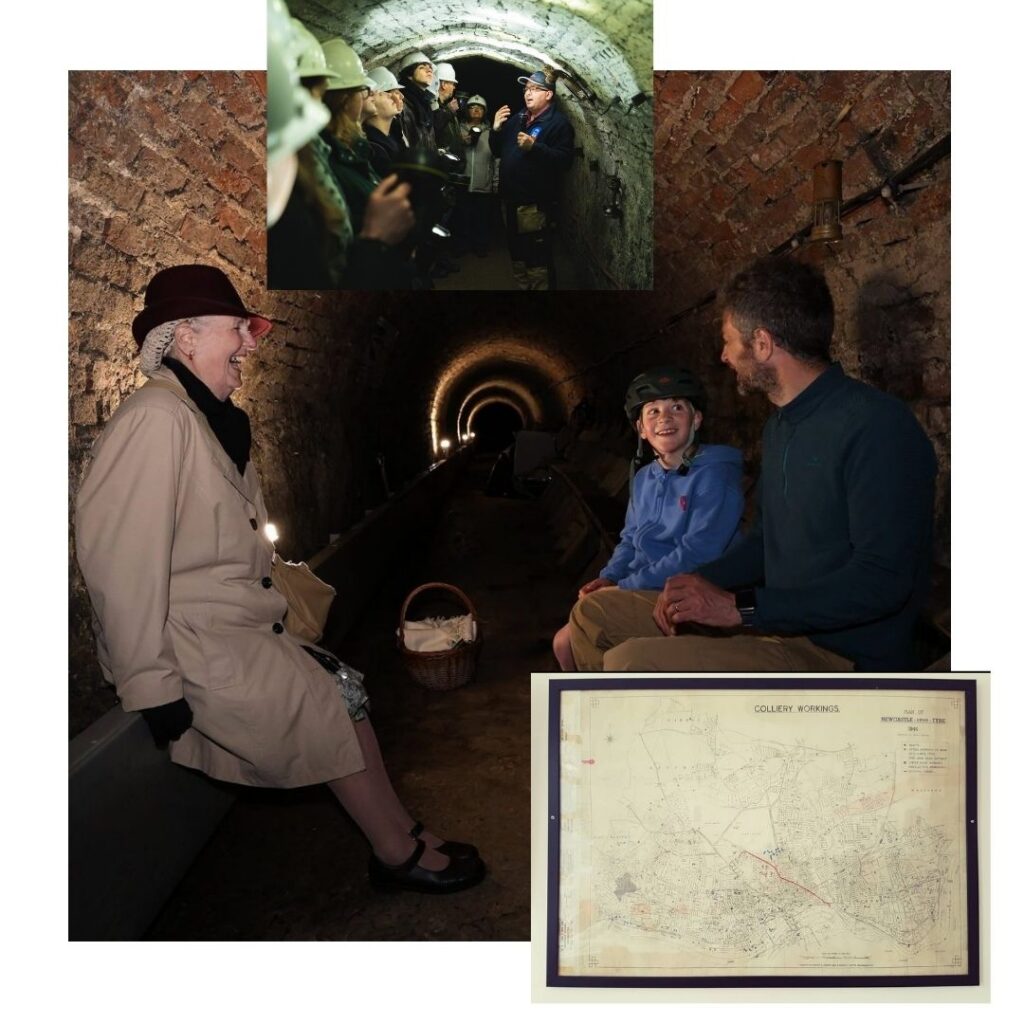
One of the valley’s most remarkable pieces of engineering sits underground. The Victoria Tunnel opened in 1842, built to carry coal from Spital Tongues Colliery down to the River Tyne, where it could be loaded onto ships far more efficiently than by cart. During the Second World War, the tunnel was converted into an air raid shelter, sheltering thousands of local residents during bombing raids.
You can now book a guided tour through the Victoria Tunnel and follow its route underground to learn about its life as a colliery wagonway.
DECLINE, THEN A QUIET REINVENTION
Like many industrial areas across Britain, Ouseburn changed dramatically in the second half of the 20th century. As traditional industries declined, factories closed, businesses moved on and buildings stood empty, and for years the valley was largely overlooked, despite sitting just a short walk from Newcastle city centre.
That quiet period turned out to matter. Large industrial buildings and low rents drew artists, musicians and independent businesses looking for affordable space. Rather than clearing the old buildings, many chose to work within them, giving Ouseburn a new purpose while keeping much of its original character intact.
FROM TOFFEE FACTORY TO CREATIVE HUB
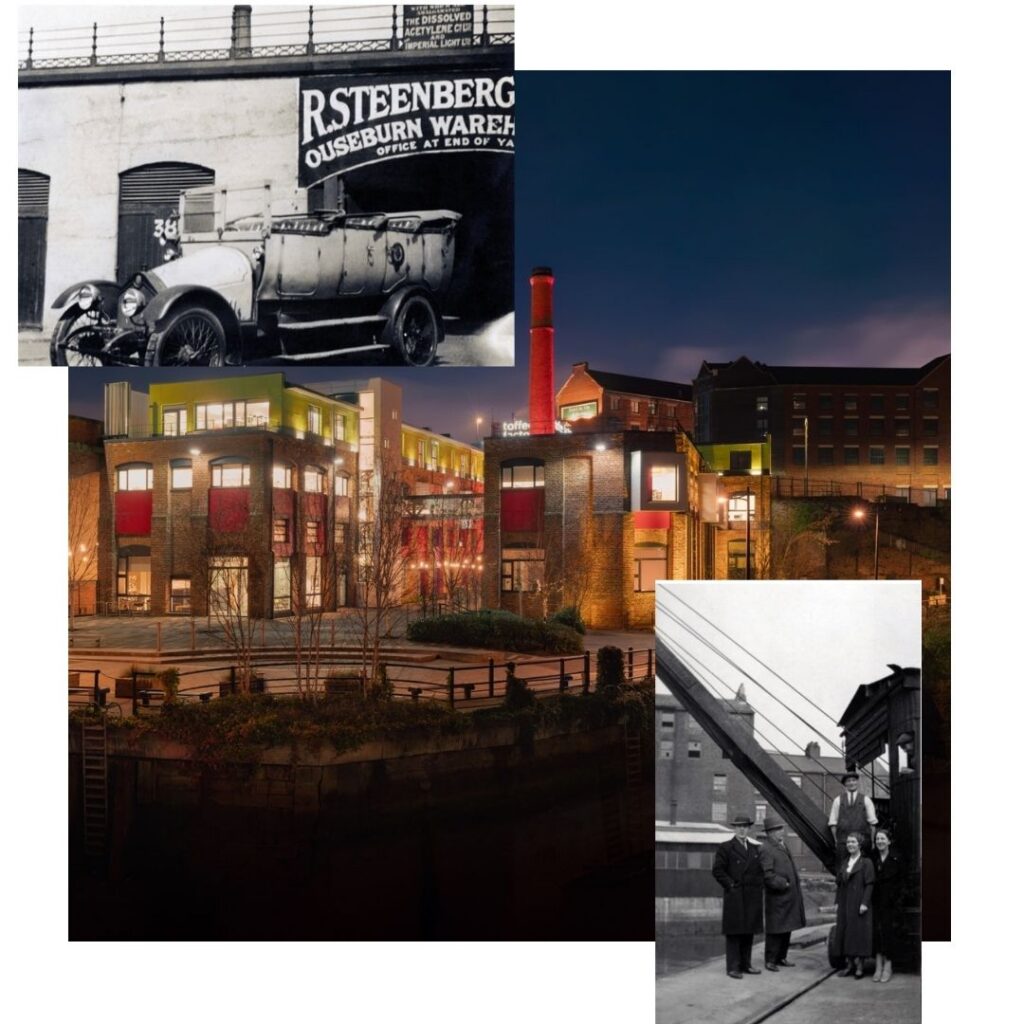
The former Maynards Toffee Factory (Lower Steenberg’s Yard, Ouseburn) is now home to creative businesses rather than confectionery. A serious fire damaged the building in 1993, and the fight to save it was one of the moments that led to the creation of the Ouseburn Trust. The shell stood derelict until it was transformed into the Toffee Factory in late 2011.
Today, Toffee Factory is home to more than 20 creative and digital businesses and remains one of the valley’s best-known landmarks, brick chimney and all.
A FLAX MILL THAT BECAME A MUSIC VENUE
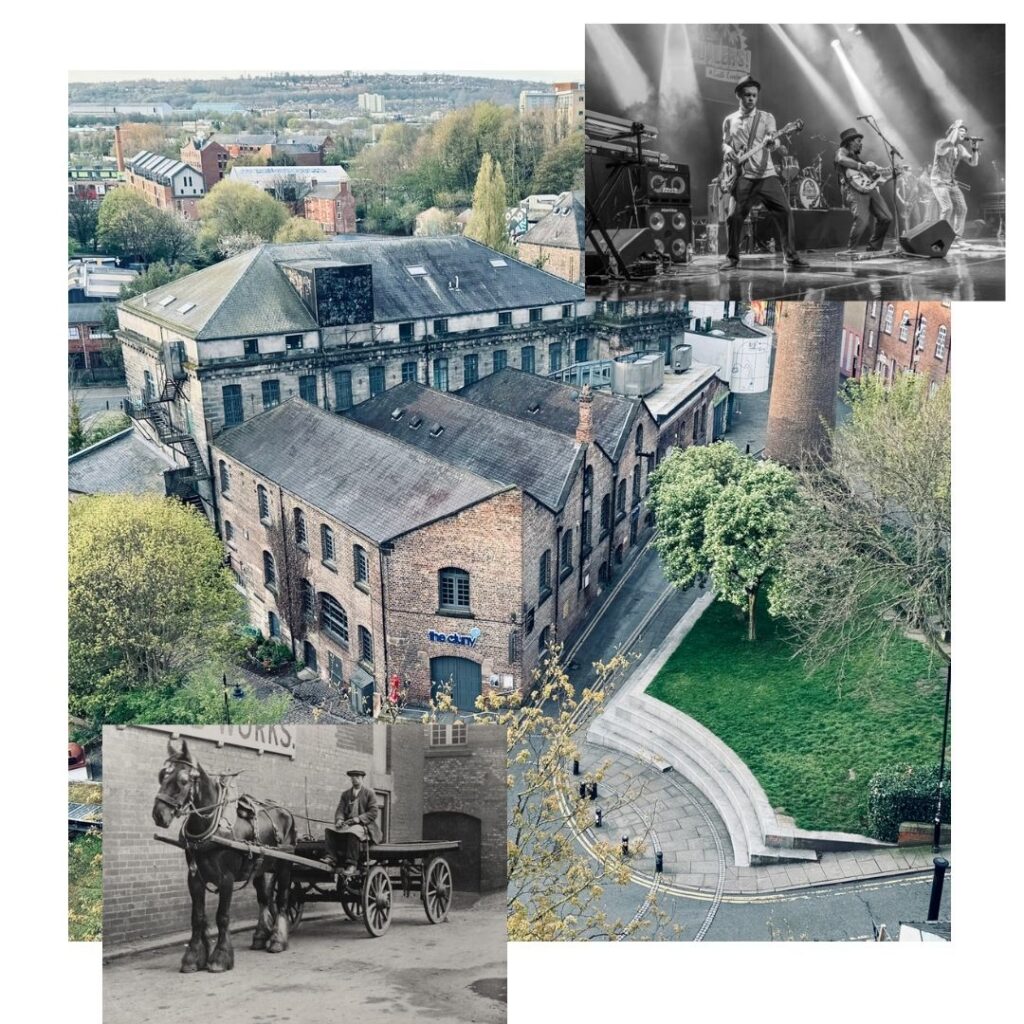
The building now home to The Cluny has been part of Ouseburn’s story for more than 170 years. It was built in 1848 as a flax mill designed by architect John Dobson, later became a flour mill, and eventually served as a bonded whisky warehouse for McPherson’s Wine and Spirit Merchants, who stored their stock under the brand name Cluny.
Part of the building opened as The Cluny Bar in 1999, and it’s since grown into one of Newcastle’s best-loved independent music venues. From flax and flour to live music, it’s a good example of Ouseburn holding onto its character while changing use entirely.
Image credit: Newcastle Libraries & Englands North East
BISCUITS TO BRUSHSTROKES
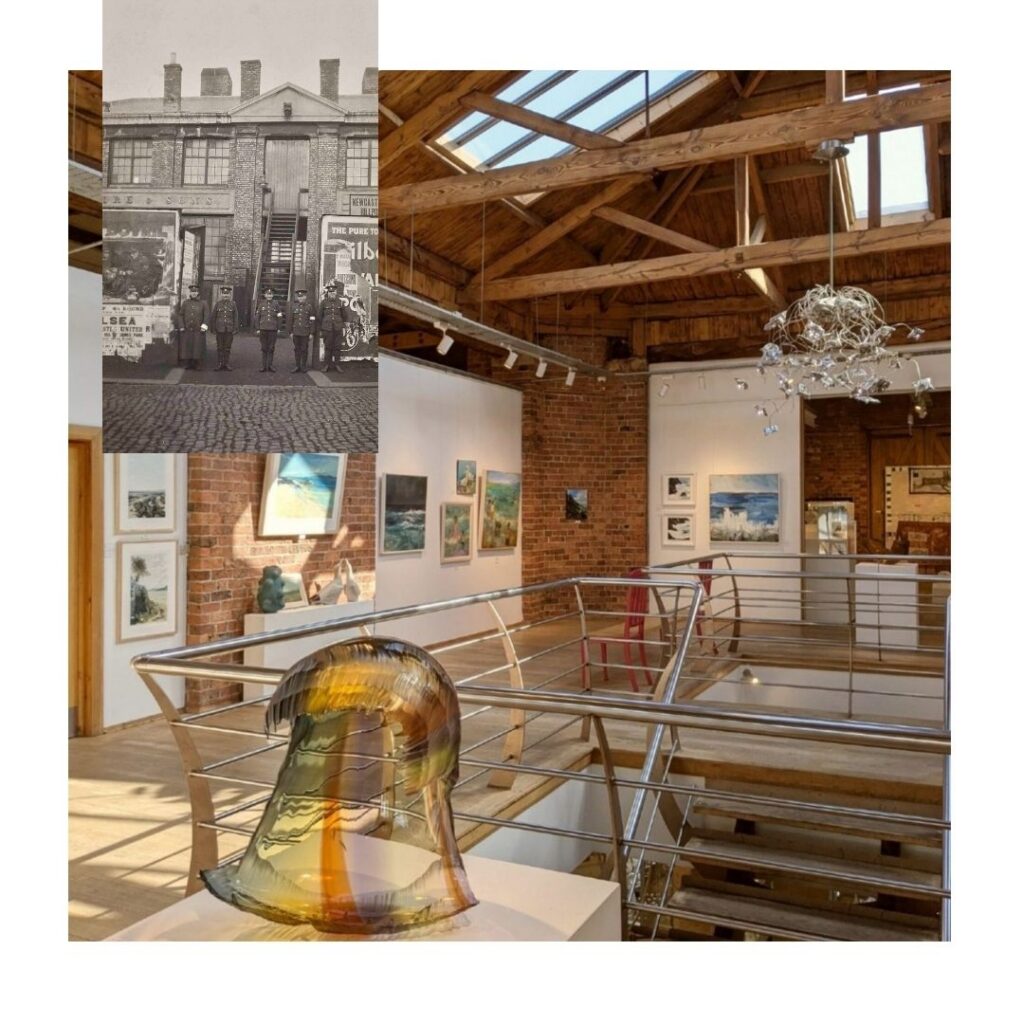
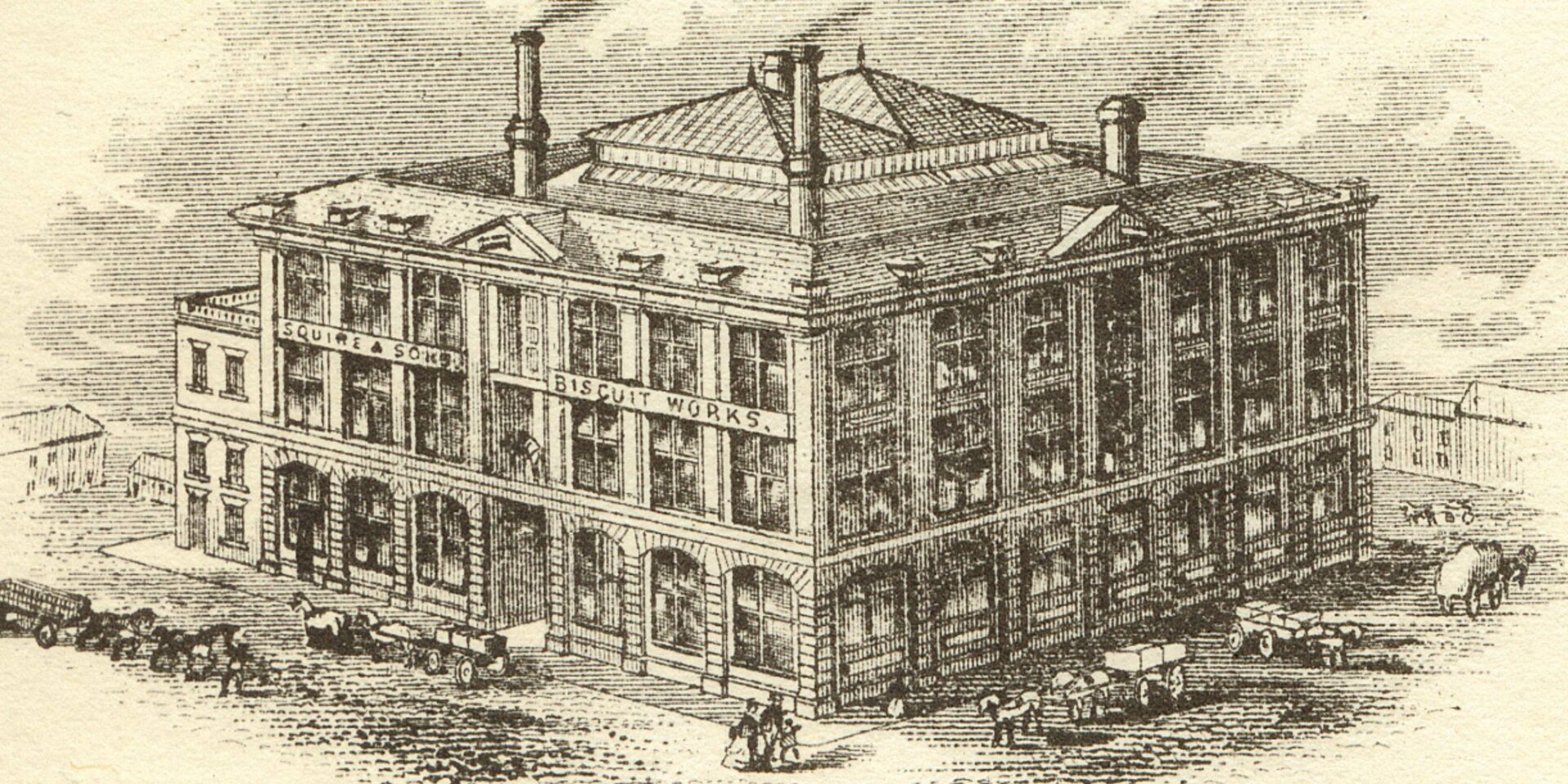
The Biscuit Factory follows the same pattern. The building began life as a Victorian biscuit warehouse before being carefully restored and reopened as an independent art gallery in 2001, with much of the original brickwork and exposed beams kept intact.
It’s now one of the UK’s largest independent contemporary art, craft and design galleries, bringing together artists and makers from across the region and beyond through its exhibitions, studios, events and cafe.
THE REST OF THE VALLEY’S STORY
Other influential organisations, including Northern Print, 36 Lime Street Studios and Seven Stories, also continue to make use of historic industrial buildings across the valley.
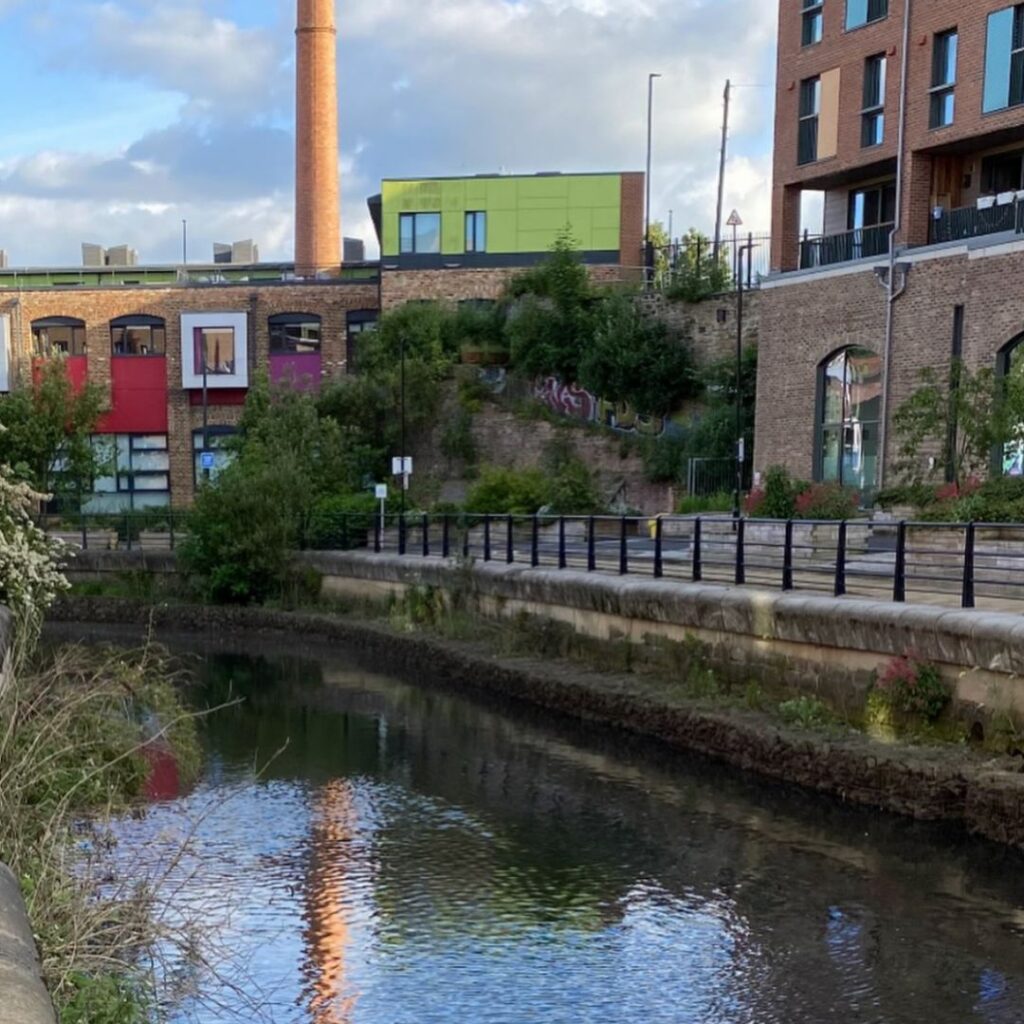
Walk around Ouseburn, and you’ll still spot old warehouse entrances, railway arches, stone steps leading to former industrial sites, and the familiar brick chimney of the old toffee factory. None of it feels out of place, because it’s never really left the neighbourhood.
BUILT ON WHAT WAS ALREADY THERE
Ouseburn’s success hasn’t come from trying to become somewhere new. It’s built on what was already there, with its industrial past now part of its identity, giving today’s creative businesses a setting that feels distinctive and genuinely tied to Newcastle’s history.
It’s easy to visit for the restaurants, music venues or galleries alone, but it’s worth looking up and around while you’re there. Behind many of the places people know today is a building that once played a very different role in the city’s industrial story.
That’s what makes Ouseburn one of Newcastle’s most interesting corners. It hasn’t erased its past; it’s found new ways to build on it.



Subscribe
Subscribe now to receive our twice-weekly emails and exclusive offers for High Life North readers.