






- Play Hard
- 12th Jun 2026
- 0
- 0 minute
Roman Vindolanda’s 2,000-year-old shoe collection is unlike anything else in the world
- Advertisement Feature
It's extraordinarily rare. To have thousands of shoes, from soldiers' boots to children's footwear and elegant sandals, all preserved in one place, is almost unparalleled in Roman archaeology.
Central image credit: Bata Shoe Museum of the exhibition in Canada
Nearly 2,000 years ago, someone threw away a rather beautiful slipper. Today, it’s one of the most beloved pieces in the collection at Roman Vindolanda Fort & Museum. We’re very glad they did.
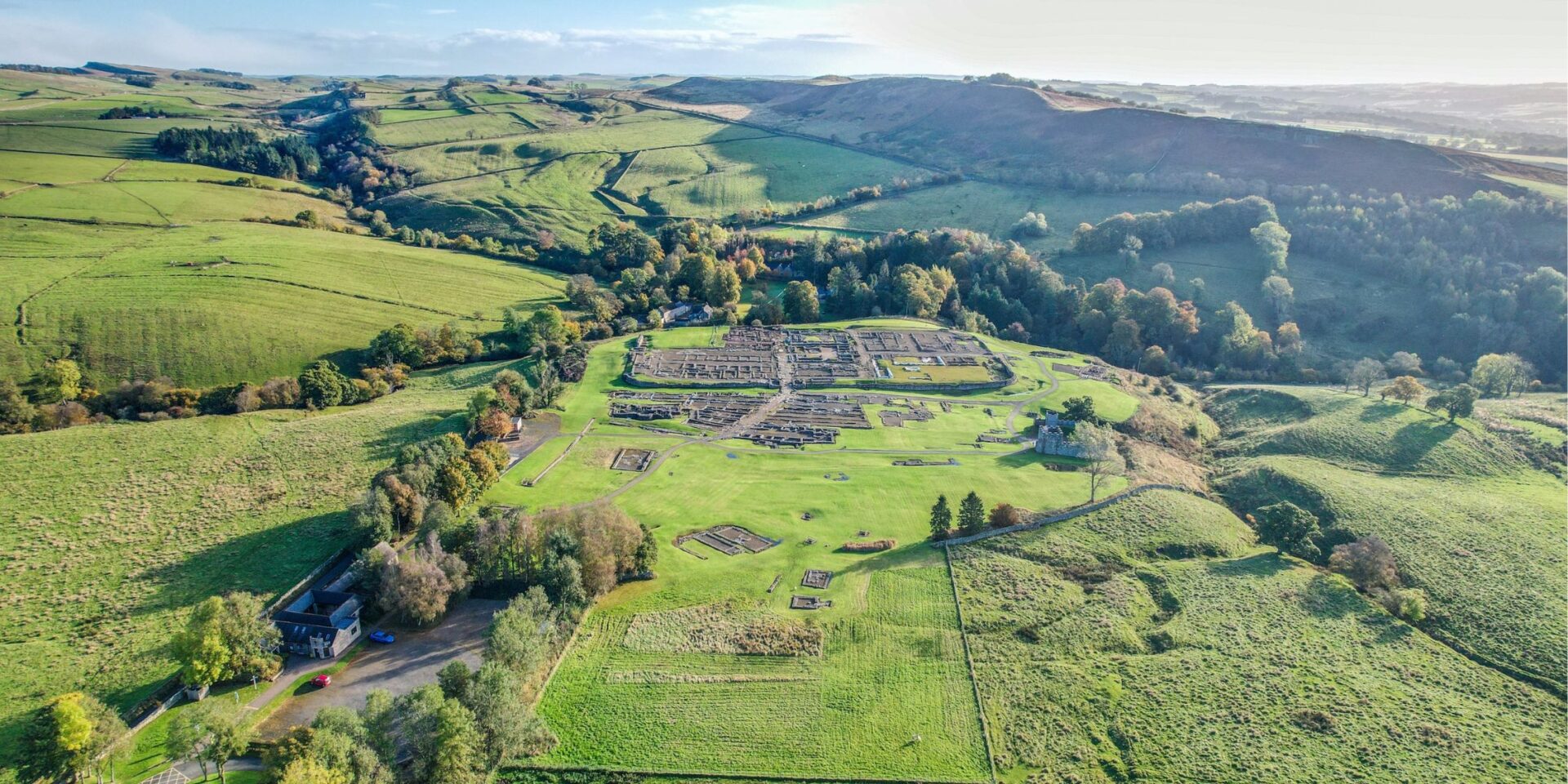
Tucked just south of Hadrian’s Wall in a stunning stretch of Northumberland countryside, Roman Vindolanda Fort & Museum is one of the most extraordinary archaeological sites in the world.
First built before Hadrian’s Wall even existed, it became a crucial garrison base for the Wall itself – demolished and rebuilt nine times over nearly three centuries, each community leaving its own mark deep in the Northumberland earth. Evidence suggests the site continued to be occupied long after the Roman army departed. What the soil preserved in that silence has been astonishing archaeologists ever since.
Its collection gives a unique glimpse of life 2,000 years ago on the edge of an empire and among its most remarkable finds? Shoes.
It turns out the habit of abandoning footwear at the back of the wardrobe is far from modern. Thanks to some very particular soil conditions unique to this corner of Northumberland, the evidence has survived.
HIGH LIFE NORTH’S TOP TIP: Every Tuesday on their Facebook page, it’s ‘Shoesday’ – spotlighting a fresh find from a collection of almost 5,000 Roman shoes.
THE MOST INTIMATE OBJECTS IN HISTORY
Think about your favourite pair of shoes for a moment. The ones that are a bit battered, worn down on one side, but you can’t bring yourself to part with them. They know things about you, how you walk, where you go and how you present yourself to the world. Roman shoes are the same. They just happen to be 2,000 years old.
Roman Vindolanda’s collection of nearly 5,000 shoes is one of the largest and most significant assemblages of Roman footwear ever discovered. Organic materials like leather rarely survive for two millennia – at most sites, they just rot away. But oxygen-poor, waterlogged ground deep beneath the surface created a natural time capsule, sealing leather away from decay for century after century.
The result is an entire Roman community’s wardrobe. Soldiers’ boots. A child’s tiny sandal. An elegant lady’s slipper that was clearly the Roman equivalent of a designer purchase. This isn’t just archaeology. It’s life, preserved.
The collection is so significant that over 100 shoes are currently travelling to the Bata Shoe Museum in Toronto, the first time pieces have made the trip to North America. This one is right here on our doorstep.
WE SAT DOWN WITH THE TEAM AT ROMAN VINDOLANDA TO FIND OUT MORE
With nearly 5,000 shoes, just how rare is the collection?
“It’s extraordinarily rare. To have thousands of shoes, from soldiers’ boots to children’s footwear and elegant sandals, all preserved in one place, is almost unparalleled in Roman archaeology. Some Roman sites might produce fragments. Vindolanda has produced an entire community’s wardrobe.”
What does footwear tell us that other artefacts can’t?
“Shoes are incredibly intimate objects, and something we all have and can relate to. They carry the marks of everyday life, the imprint of the person who wore them. You can see how they walked by the wear marks on the sole. A child’s shoe or a worn soldier’s boot tells us far more about ordinary human experience than a statue of an emperor ever could.”
People picture Roman history as battles and emperors. Do shoes change that?
“Completely. Vindolanda wasn’t just a military outpost. Women, children and families lived here too. The craftsmanship and maker’s stamps show that people on the edge of the Roman Empire still cared deeply about fashion, identity and status. Two thousand years ago, people aspired to the latest trend and imported luxury goods. And if they couldn’t afford it? They ended up with a slightly less well-made copycat version. Sound familiar?”
Do locals sometimes underestimate what they have on their doorstep in Northumberland?
“When something has always been on your doorstep, it’s easy to underestimate just how extraordinary it really is. If your last visit was a rainy school trip many years ago, it is definitely time to come back. Roman Vindolanda Fort & Museum is a genuine World Heritage Site with a world-class museum and it belongs to this region.”
THE SHOES WE’RE FASCINATED BY
The star of the show is the lady’s slipper, sometimes affectionately called Lepidina’s slipper, after Sulpicia Lepidina, wife of fort commander Flavius Cerialis. Made in Gaul by craftsman Lucius Aebutius Thales, who stamped it with his maker’s mark and decorated it with vine leaves and interlocking cornucopias. The toe thong snapped, and instead of having it repaired, she simply threw it away. Fashion, status, and a touch of extravagance on the edge of empire. Some things really haven’t changed.
Then there’s the baby boot, a miniature adult shoe, complete with an intricate fishnet upper, so tiny its owner would barely have been walking. Found in the commanding officer’s house, it likely belonged to one of the Cerialis children, a reminder that Vindolanda was a home as much as a military installation.
Perhaps the most quietly moving finds are a pair of children’s shoes, excavated as part of a hoard of over 400 in 2016. Small enough to belong to a child of around five or six, found close together, one of only a handful of actual pairs in the collection. They’ve since travelled to Arles and Florence and now feature in the Bata exhibition in Toronto.
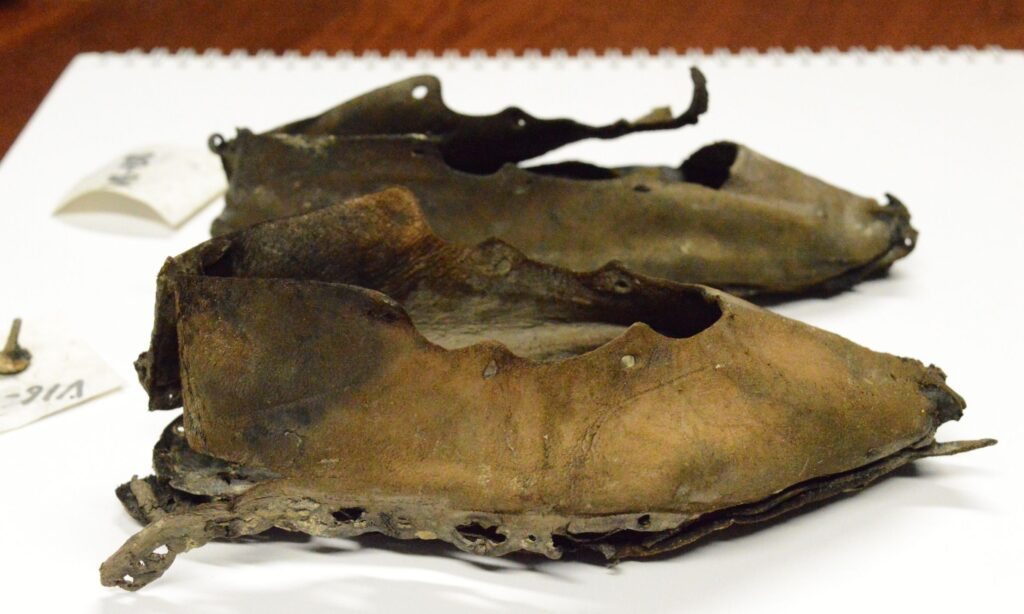
When the curator was asked why these are their personal favourite, the answer was quietly perfect: “Sometimes with objects you just love them.” A young life, possibly born right here at Vindolanda. What a thought.
MUCH MORE THAN SHOES AT ROMAN VINDOLANDA
If you’re looking for things to do in Northumberland that genuinely stop you in your tracks, Roman Vindolanda Fort & Museum delivers at every turn.
The writing tablets, voted Britain’s Top Treasure, are the oldest surviving handwritten documents in Britain. Wafer-thin slivers of wood covered in spidery ink, they read like postcards from another life: birthday invitations, complaints about the weather, a request for more underpants. The 2018 Wooden Underworld gallery added another dimension entirely, housing 2,000-year-old wooden finds that include a toilet seat and a toy sword.
Out on site, active excavations run every year between April and September, giving visitors the chance to watch archaeologists at work and witness new discoveries emerging from the ground in real time. The physical remains span bath houses, barrack buildings, temples, including the only temple to a Roman god found inside an auxiliary fort anywhere in the Roman Empire, and reconstructed sections of Hadrian’s Wall that bring the landscape vividly to life.
Few places in Northumberland make history feel so personal, so immediate, so alive. One of the world’s great archaeological experiences is right here in the North East and it belongs to us.
Vindolanda is open come rain or shine.
Roman Vindolanda, Chesterholm Museum, Bardon Mill, Hexham, Northumberland, NE47 7JN
Image credit: The Vindolanda Trust


Rachael Ellis
Head of Content
After gaining a first in her BA Media and Journalism degree at Northumbria University, Rachael worked at Newcastle’s leading regional newspaper with her stories being picked up in national and global newspapers. She spent two very successful years giving a voice to those communities across the North East who otherwise…
Subscribe
Subscribe now to receive our twice-weekly emails and exclusive offers for High Life North readers.