







- Work Hard
- 12th Jun 2026
- 0
- 0 minute
Meet the 82-year-old who has dedicated her life to rescuing thousands of hedgehogs across Northumberland
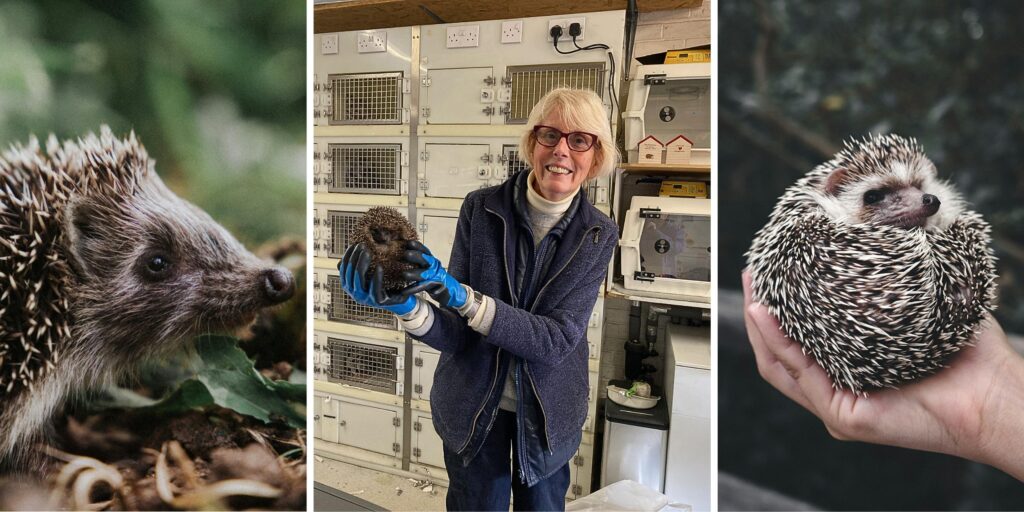
"I have always believed that sometimes life places something in your path for a reason, and that little hedgehog changed the course of mine."
She reveals how we can help these adorable spiky little creatures….
Carole Catchpole didn’t set out to run a charity. She just loved hedgehogs.
More than two decades later, she’s still at it, and these adorable spiky little creatures of the North East couldn’t be in safer hands.
It all started with 13 hedgehogs around a feeding station
There’s something so heart-warming about watching hedgehogs in the dark. Carole Catchpole knows it well. Back in 1980, she and her late husband moved to Longframlington in Northumberland and quickly noticed they had nightly visitors.
“We began putting out food and water and spent many peaceful evenings simply watching them,” she says. “On one memorable night, we counted 13 gathered around the feeding station.”
When her husband sadly died in 1998, Carole kept up the ritual. That same autumn, a particularly small hedgehog caught her eye – too small, she feared, to survive the winter alone. She took it in. One hedgehog became many. And many became thousands.
“I have always believed that sometimes life places something in your path for a reason,” she says. “And that little hedgehog changed the course of mine.”
FROM GARDEN CARER TO REGISTERED CHARITY
Word travels fast when people find out you care for hedgehogs. More and more began arriving at Carole’s door. A timely response to an RSPCA radio appeal connected her with Chris McLaren in Sunniside, an experienced hedgehog rehabilitator who became her mentor, teaching her treatments, medications, and the practicalities of getting a wild animal well enough to go home.
Good vets, she says, have been just as essential. The team at Cheviot Veterinary Practice in Powburn have performed some extraordinary procedures over the years. One of the most remarkable involved a hedgehog found near the Angel of the North, fittingly named Ange, who arrived in obvious distress. She delivered a stillborn hoglet, but a scan revealed more were still inside. When an injection failed to start labour, the vet performed a caesarean section.
“Although the remaining hoglets were sadly malformed and could not be saved, Angel survived,” Carole says. “And that was only possible because a member of the public realised she needed help.”
By 2011, a group of like-minded people had formalised the operation. In 2013, the Northumbrian Hedgehog Rescue Trust became a registered charity. Today, it cares for thousands of hedgehogs a year, all without a penny of grant funding, and entirely on the strength of donations and volunteer hours.
WHY HEDGEHOGS NEED US MORE THAN EVER
It’s easy to assume hedgehogs are doing fine. They’re a familiar sight, a beloved one, but the numbers tell a different story. Rural hedgehog populations in Britain have declined by between a third and three-quarters since 2000, and in 2020, hedgehogs were added to the national Red List as vulnerable to extinction.
Gardens, Carole says, can genuinely make a difference. Leaving out meaty cat or dog food and a shallow dish of fresh water each night is one of the simplest things anyone can do, especially during dry spells, when natural food like beetles, caterpillars and worms becomes harder to find.
But gardens can also be dangerous places. Strimmers and mowers cause some of the worst injuries the rescue sees, particularly in summer. Robotic lawnmowers used at night, when hedgehogs are most active, pose a growing risk. Netting, ponds without easy exit points, uncovered drains, and bonfires built up over time can all be fatal. Pampas grass and compost heaps are favourite nesting spots, so both need checking before cutting or turning.
“Small changes in a garden can make a lifesaving difference,”
Carole says,
A RESCUE THAT DOES FAR MORE THAN RESCUE
The trust’s work extends well beyond taking in sick animals. Volunteers give talks to schools, Scout groups, Women’s Institutes and gardening clubs across the region, with one volunteer, Jen, particularly gifted at pitching the sessions to whichever audience is in front of her.
“Children are often the boldest questioners,” Carole says, “and ask the things adults are too shy to say aloud.”
The trust also cares for a small number of disabled hedgehogs, some blind, some amputees, in protected outdoor gardens, offering them a quality of life rather than an automatic end. Several have thrived, and some disabled mothers have even gone on to have young of their own.
WHAT VOLUNTEERING AND FOSTERING ACTUALLY LOOK LIKE
Volunteers are, as Carole puts it, the heart of everything. Every new volunteer is trained and paired with a buddy before working independently. Most mornings begin at 8.30am with cage cleaning, health checks and medication rounds, work that can take a couple of hours or run well into the afternoon depending on patient numbers.
Fostering is something fewer people know about, but it’s vital to the rescue’s capacity. Foster carers look after a hedgehog at home through the winter months, typically from October until release in March or April, freeing up space at the rescue for emergency admissions.
“Our policy has always been to do our very best, never to turn away a hedgehog in need,” Carole says. “And fosterers make that possible.”
HOW YOU CAN HELP – STARTING TODAY
If you can’t commit to volunteering or fostering, there’s still plenty to do. Fundraising, donating or sending supplies all go directly towards the hedgehogs’ care. No one at the trust, including Carole, is paid.
“Every one of us gives our time freely, simply because we care deeply about these iconic little animals,” she says. “It is hard work, but it is also a privilege.”
At 82, Carole isn’t slowing down. And she has one final wish for anyone reading this: “I would hate to imagine a future in which hedgehogs no longer wander through our gardens and across our countryside. If we care for the spaces we share with wildlife, we can all play a part in giving hedgehogs a better future.”



Rachael Ellis
Head of Content
After gaining a first in her BA Media and Journalism degree at Northumbria University, Rachael worked at Newcastle’s leading regional newspaper with her stories being picked up in national and global newspapers. She spent two very successful years giving a voice to those communities across the North East who otherwise…
Subscribe
Subscribe now to receive our twice-weekly emails and exclusive offers for High Life North readers.