







- Play Hard
- 10th Jun 2026
- 0
- 0 minute
Meteor showers, electric blue clouds and the Milky Way: your June Northumberland stargazing guide
Northumberland stargazing just hits differently. There’s something so magical about standing in a dark field, listening to only the sound of nature and watching the sky do its thing.
And if you haven’t made it out to Northumberland on a clear night yet, June might just be the nudge you need – because what’s happening overhead this month is spectacular.
WHY NORTHUMBERLAND?
England’s largest International Dark Sky Park sits right here on our doorstep, and it’s no accident that stargazers travel from across the country and beyond to stand in it.
Northumberland holds the distinction of having some of the darkest skies in England, with the Northumberland International Dark Sky Park covering more than 1,400 square kilometres across the Northumberland National Park and Kielder Water & Forest Park.
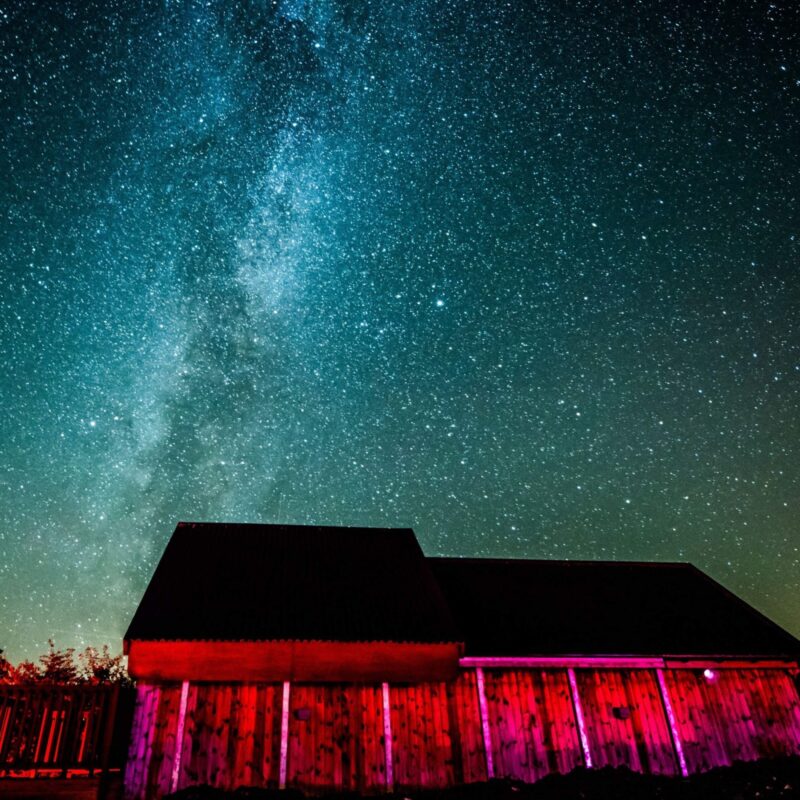
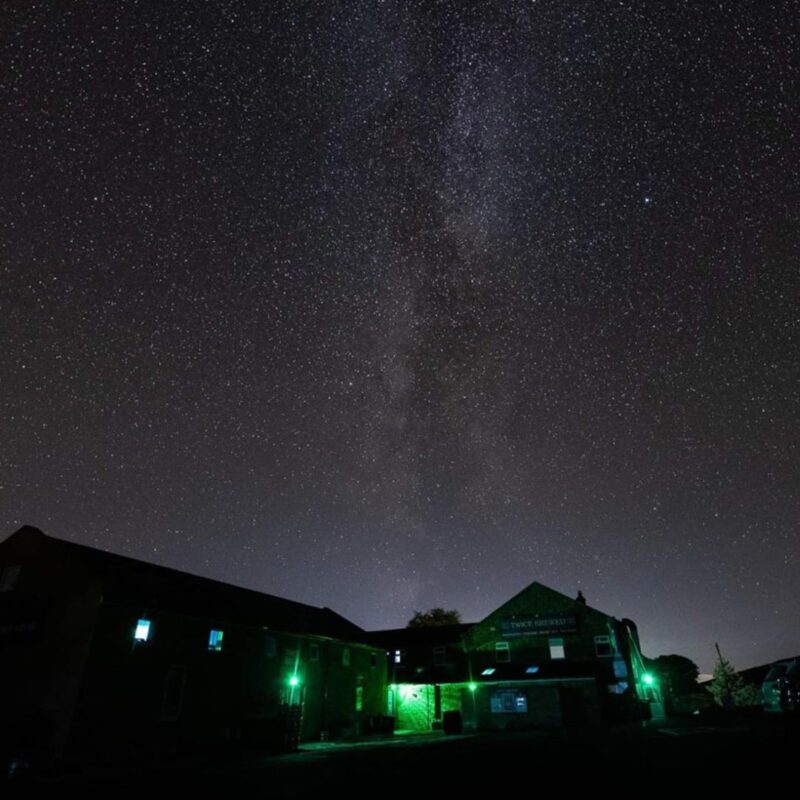
Light pollution is minimal out here, which means on a clear night you can see the Milky Way stretch in an arc above you like something from a painting. The kind of sky that makes you feel very small in the best possible way.
THE DATES TO PUT IN YOUR DIARY
Not every night in June is equal. Here are the ones worth planning around.
Rare electric blue cloud season
Monday 1st June – Tuesday 31st July
June is peak season for noctilucent clouds, rare electric-blue formations made from ice crystals high in the mesosphere that glow on the horizon just after sunset or before sunrise. They’re a midsummer-only phenomenon and completely worth staying up late for. Keep an eye on the northern horizon on clear nights throughout the month.
Ophiuchid meteor shower peak
Around Saturday 20th June
The Ophiuchid meteor shower is active throughout June, with its peak expected around Saturday 20th June. It’s not the flashiest shower of the year – you’re looking at around five to eight meteors per hour under ideal conditions – but paired with Northumberland’s near-zero light pollution, even a quiet shower becomes an event worth witnessing. Find a spot away from any glow, give your eyes 20 minutes to adjust, and let the sky unfold.
Summer solstice
Sunday 21st June
The longest day of the year falls on Sunday 21st June, making it one of the most atmospheric nights to be outside. The darkness doesn’t arrive until late, but there’s something undeniably special about watching the solstice sky and noctilucent clouds are at their most active right around this point in the calendar.
Jupiter and Saturn
Throughout June
Jupiter and Saturn are putting in a strong appearance this month, rising in the south-east as the night draws on and climbing steadily through the small hours. A basic pair of binoculars will get you Jupiter’s four Galilean moons, Io, Europa, Ganymede, and Callisto, all visible in a rough line on either side of the planet.
THE BEST NORTUMBERLAND STARGAZING SPOTS
WHAT TO BRING
A flask, a blanket, and a star map app. SkySafari and Stellarium are both excellent, and both free. Pick a night when the moon is in its new phase – Monday 15th June to maximise the darkness and give yourself the best possible chance of seeing the Milky Way in all its glory.
The truth is, you don’t need to travel far or spend much to have an extraordinary experience under a Northumberland sky. You just need to look up.


Rachael Ellis
Head of Content
After gaining a first in her BA Media and Journalism degree at Northumbria University, Rachael worked at Newcastle’s leading regional newspaper with her stories being picked up in national and global newspapers. She spent two very successful years giving a voice to those communities across the North East who otherwise…
Subscribe
Subscribe now to receive our twice-weekly emails and exclusive offers for High Life North readers.