





- Play Hard
- 27th Mar 2026
- 0
- 0 minute
Brighter days at Cragside: What to look forward to this spring and summer
- Advertisement Feature
As the days grow longer and Northumberland begins to bloom, there are few places more magical to spend a sunny afternoon than Cragside.
Nestled in the Debdon Valley near Rothbury, this extraordinary National Trust estate offers dramatic landscapes, innovative Victorian history and spectacular gardens bursting into life.
From scenic walks and rhododendron displays to hidden engineering marvels inside Britain’s first smart home, spring and summer at Cragside are filled with reasons to explore.
HIGH LIFE NORTH’S TOP TIP: If you travel to Cragside via bus (X14 or Liberty 471), you’ll receive a 25% discount on entry by showing your ticket on entry.
SCENIC NORTHUMBERLAND WALKS AND REOPENING TRAILS
Spring marks the reopening of some of Cragside’s most scenic walking routes.
The Views of Cragside Walk, reopening on 3rd April, is a five-mile route that rewards walkers with breathtaking views across the Northumberland countryside. From carefully positioned benches and clearings in the trees, visitors can admire sweeping farmland, rugged moorland and the distant Simonside Hills.
On the same date, The Gorge reopens – a dramatic ravine nestled between the Pinetum and the Powerhouse. Here, water from the Debdon Burn tumbles over rocks and cascades into the river below.
The Armstrongs reshaped this landscape in the 19th century, blasting rock and rearranging boulders to create the spectacular waterfalls visitors see today. Crossing wooden bridges and cliffside walkways, it’s one of the most atmospheric corners of the estate.
RHODODENDRON SEASON IN FULL BLOOM
Later this spring, Cragside’s rhododendrons will begin their colourful display. These vibrant blooms are one of the highlights of the Cragside calendar, transforming the landscape into a patchwork of reds, pinks and purples.
The Rock Garden is one of the best places to experience the early blossoms. Flowering slightly ahead of the rest of the grounds from late May into June, the garden’s winding paths and grand stone steps weave through dramatic rock formations and flowering shrubs, offering spectacular views across the Debdon Valley and the iconic Iron Bridge.
Later in the season, rhododendrons spread across the wider estate, adding bursts of colour among the towering trees.
WOODLAND WANDERINGS AND SUMMER GARDENS
Cragside’s grounds are a landscape masterpiece. Once a bare moorland, William and Margaret Armstrong transformed it into a vast, carefully designed garden filled with trees, lakes and dramatic water features.
The Pinetum offers one of the most peaceful walks on the estate. Here, towering conifer trees stretch high into the sky, creating a cathedral-like canopy where sunlight filters through the branches. Many of these trees were planted as saplings more than 160 years ago and were chosen specifically for their immense size once at maturity.
The Formal Garden bursts with colour throughout summer. Victorian-inspired planting schemes create striking geometric patterns, with beds filled with bold, vibrant flowers.
LAKES, WILDLIFE AND BIG NORTHUMBERLAND VIEWS
Beyond the gardens, Cragside’s three engineered lakes showcase Armstrong’s fascination with harnessing the power of water.
Tumbleton Lake, located near the visitor centre, offers a gentle circular walk of just over a mile, perfect for stretching your legs after arriving.
Further up the estate lies Nelly’s Moss, a peaceful wildlife haven. In spring, greylag geese and swans return to the lakes, while frogs and toads begin to emerge along the water’s edge.
It’s one of the best spots to pause, soak up the scenery and enjoy the quiet beauty of the Northumberland countryside.
STEP INSIDE BRITAIN’S ORIGINAL SMART HOME
At the heart of the estate sits Cragside House, a pioneering mansion built by Victorian power couple William and Margaret Armstrong. Known as the first house in the world to be powered by hydroelectricity, the property was a technological marvel.
The Butler’s Pantry was once the operational hub of the home. The Butler would communicate via the on-estate telephone system with the Caretaker of Electric Light (arguably the best job title ever!) in the Powerhouse in the valley below. Hydroelectricity was still experimental, so power had to be carefully directed to whichever rooms were in use at the time.
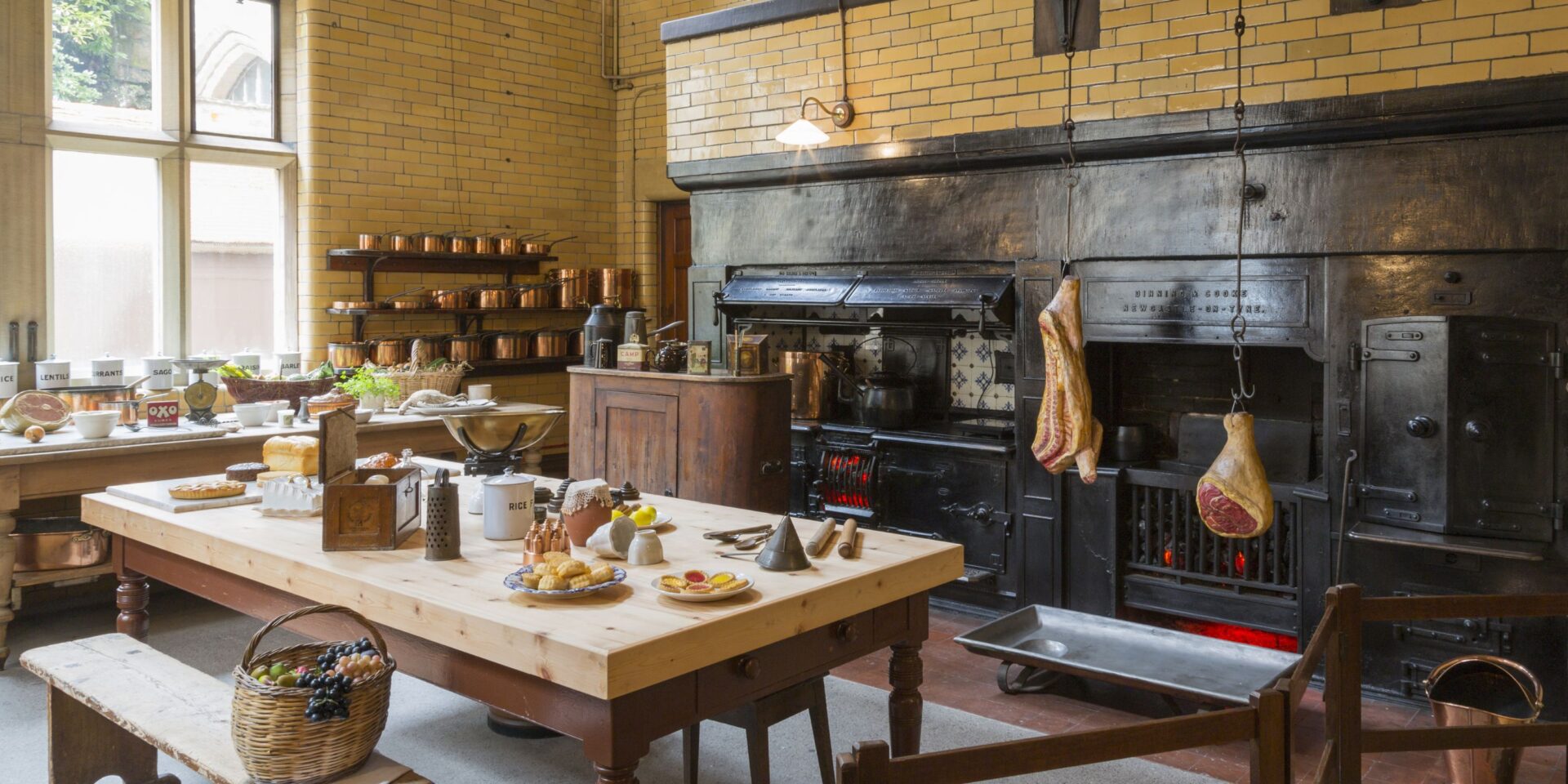
Nearby, the grand Kitchen provides a glimpse into Armstrong’s passion for efficiency. A rotating roasting spit above the range was powered by a water-driven mechanism in the basement, turning through an intricate system of gears hidden beneath the floorboards. It’s a fascinating example of Victorian ingenuity at work.
Elsewhere, innovation meets modern living. One of the earliest passenger lifts, powered by a hydraulic ram, transported luggage and coal between floors, while the Library was home to the first domestic installation of Joseph Swan’s electric lightbulb.
For pure indulgence, the ‘Turkish Bath Suite’ offered the Armstrongs and their guests a private spa experience complete with showers, heated floors and a plunge pool lined with blue-and-white Delft tiles, an impressive luxury in the Northumbrian countryside.
The Drawing Room, meanwhile, was designed to impress. With its vast six-metre Italian marble fireplace, glittering glass ceiling and plush carpet, it was the setting for glamorous soirées attended by royalty and international guests.
PICNICS, ICE CREAM AND SUNNY DAY STOPS
Of course, exploring Cragside can work up an appetite, and there are plenty of places to stop for refreshments.
Crozier’s Kiosk, located near Nelly’s Moss Lakes and the play area, is a popular pit stop for walkers. Named after the Armstrong family’s butler, it’s the perfect place to grab a drink, snack or scooped ice cream before continuing your adventure.
Closer to the House, The Still Room offers freshly scooped ice cream in a choice of flavours, along with cakes, bakes and sandwiches.


Rachael Ellis
Head of Content
After gaining a first in her BA Media and Journalism degree at Northumbria University, Rachael worked at Newcastle’s leading regional newspaper with her stories being picked up in national and global newspapers. She spent two very successful years giving a voice to those communities across the North East who otherwise…
Subscribe
Subscribe now to receive our twice-weekly emails and exclusive offers for High Life North readers.