







- Feel Good
- 8th Jul 2026
- 0
- 0 minute
Half a million children are hungry this summer – here’s how we can help
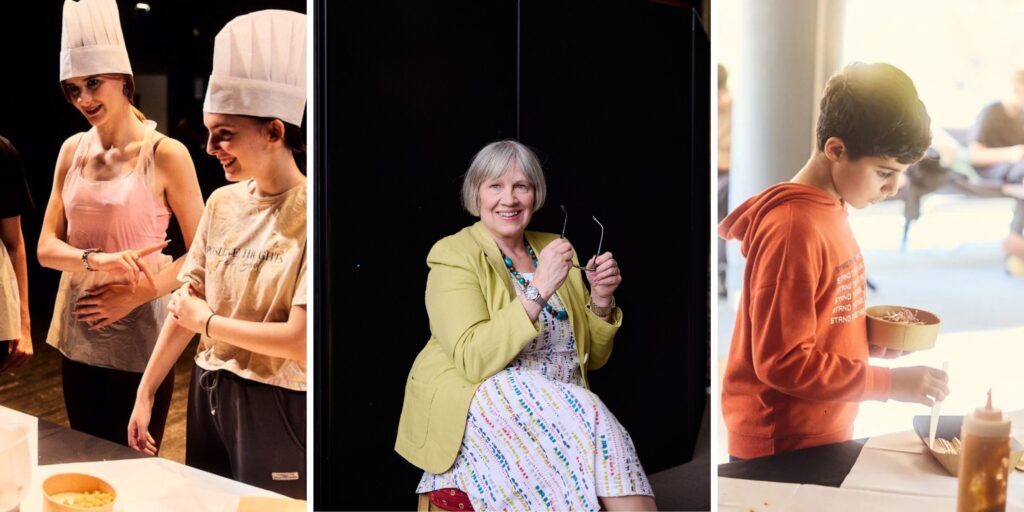
Photography by Christopher Owens. Read the full article on Pattern.
Few people understand the reality of child food poverty in this country better than Professor Greta Defeyter OBE from Northumbria University.
She’s spent years researching holiday hunger, advising government on the issue, and helping shape the Holiday Activities and Food programme from the ground up – so when she says a new policy decision risks undoing that progress, it’s worth paying attention.
Here, Greta breaks down exactly what’s changed, why it matters and what needs to happen next.
WHAT IS THE HAF PROGRAMME?
“The Holiday Activities and Food (HAF) programme provides nutritious meals, enriching activities and free childcare places during school holidays for children from families on low incomes who qualify for means-tested free school meals (FSM) during termtime. It is funded by the Department for Education (DfE) and administered by all higher-tier local authorities in England.
The Healthy Living Lab at Northumbria University began researching holiday provision and holiday hunger before HAF was introduced, and continues to research the programme today.
In 2020, I led a number of co-design workshops to help finalise the HAF framework ahead of its nationwide rollout in 2021. Since 2022, the DfE has provided 15.6 million HAF days to children and young people across England, and continues to invest £200M a year in the scheme.
In other words, the UK Government deems them poor enough to receive free school meals during term time but not during the holidays.
Multiple studies have shown HAF to be a hugely successful programme across a range of social, health, educational and financial outcomes, offering a social return on investment of £8 for every £1 spent.”
A WELCOME EXPANSION – WITH A CATCH
“The UK Government’s Child Poverty Strategy, launched last year, was welcomed by many, and I was pleased to see it included the expansion of FSM to all pupils from households receiving Universal Credit. Some of these parents and carers live on incomes as low as £7,500 a year. This extension is a well-informed decision that will see a further 500,000 children become eligible for free school meals from September 2026, easing pressure on families amid the ongoing cost-of-living crisis.
However, unlike existing FSM pupils, these newly eligible children will not be entitled to attend HAF. In other words, the government deems them poor enough for free school meals during term time, but not during the holidays.”
UNDOING THE GAINS OF TERM-TIME SUPPORT
“One of the core aims of HAF was to ensure children who normally receive free school meals get a free, nutritious meal during the holidays too, alongside enriching activities — in line with the government’s own recommendations for reducing childhood obesity and malnutrition.
Alongside colleagues at Feeding Britain and the North East Child Poverty Commission, I believe denying these 500,000 children the chance to register for HAF is socially and morally unjust, and risks undoing the very gains term-time FSM is meant to deliver.”
A CALL TO ACTION
“Given the scale of child poverty across England, particularly in the North, I’m calling on the UK Government to reverse this policy and urging MPs and regional mayors, past and present, to join that call.”
To show your support, sign Feeding Britain’s petition and send a message to Westminster about how highly these programmes are valued, and how vital it is to keep the link between HAF and FSM intact.
MEET PROFESSOR GRETA DEFEYTER OBE
Professor Greta Defeyter OBE is Dean of Social Mobility Policy Engagement at Northumbria University, and Chair of Feeding Britain. A developmental psychologist by background, she has advised government on the impact of food insecurity, school breakfast clubs and holiday hunger.



Subscribe
Subscribe now to receive our twice-weekly emails and exclusive offers for High Life North readers.